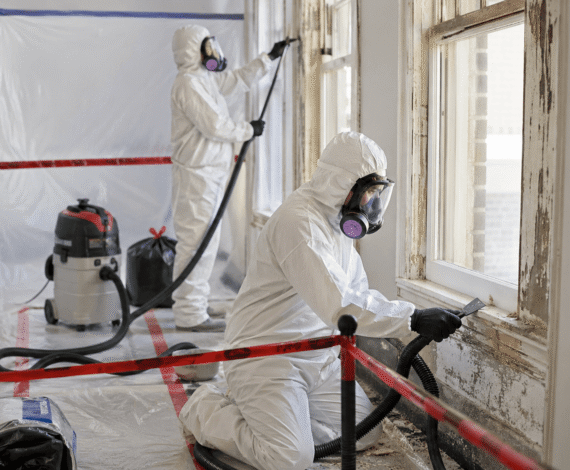
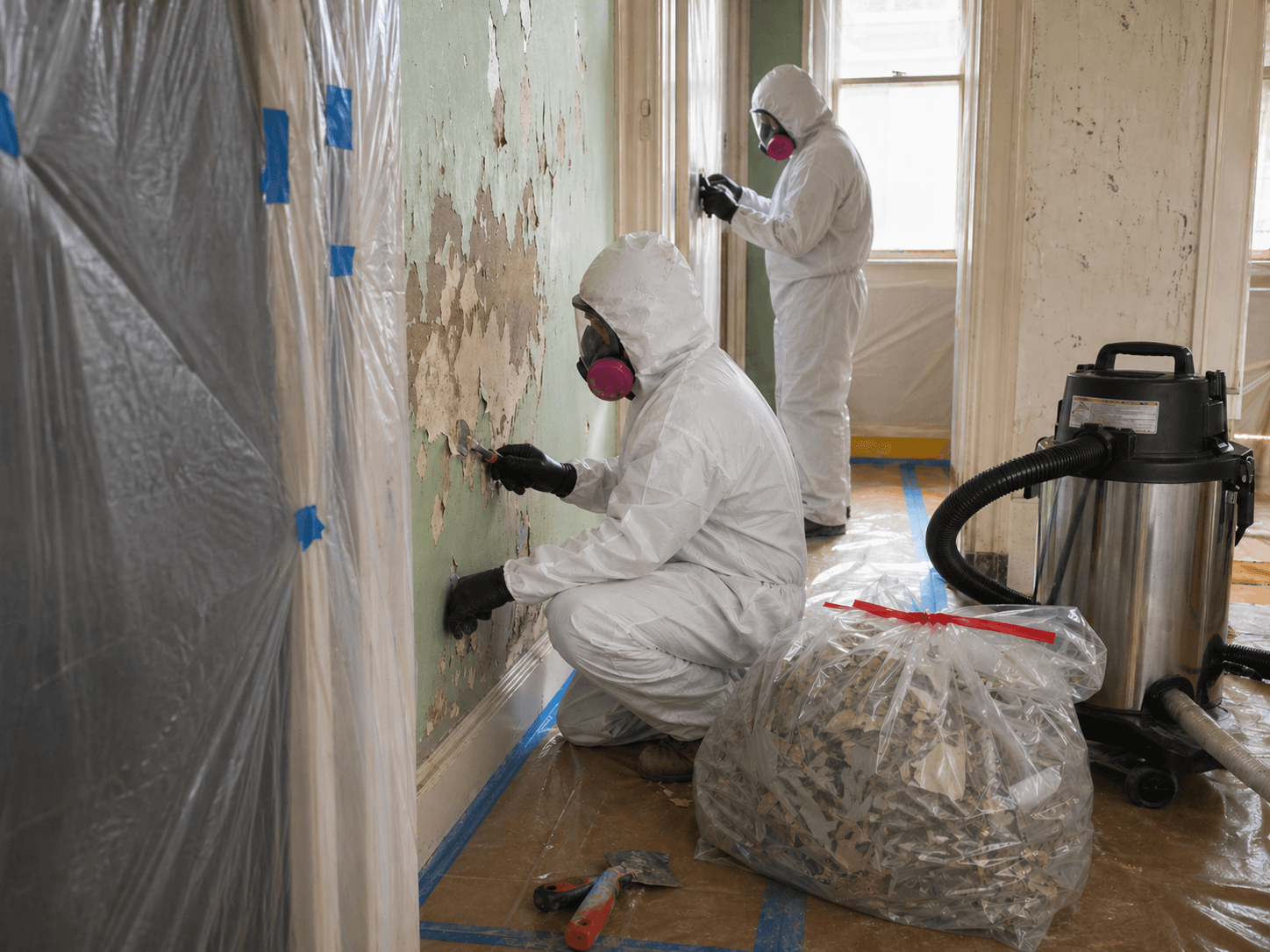
Lead paint abatement is more than scraping paint off a surface. It is a controlled environmental process designed to reduce or eliminate lead-based paint hazards while protecting people and the surrounding property.
That process may involve removal, encapsulation, enclosure, component replacement, HEPA cleaning, waste management, and coordination with inspection or clearance professionals. The right method depends on the building, the condition of the paint, the surfaces involved, and what the space will be used for after the work is complete.
EnviroWorx supports lead paint abatement projects across Ohio, Indiana, Kentucky, Tennessee, and West Virginia. We work with commercial buildings, industrial facilities, schools, public properties, apartment buildings, warehouses, restoration sites, and construction projects where lead hazards must be handled with discipline from start to finish.
Lead-based paint becomes especially dangerous when it is disturbed. Sanding, cutting, grinding, drilling, scraping, pressure washing, demolition, and structural repairs can all release lead dust into the air or scatter lead-contaminated debris across the site.
That is why every abatement project needs a plan before work begins.
EnviroWorx evaluates the work area, identifies project risks, reviews surface conditions, and determines what controls are needed to keep lead dust contained. Planning may include containment layout, worker access routes, waste staging areas, cleaning procedures, disposal requirements, and coordination with the property owner or general contractor.
A rushed approach can create bigger problems fast. Dust migration, contaminated debris, poor cleanup, and improper waste handling can delay a project and create added liability. Our process is built to avoid those problems before they start.
Many buildings constructed before 1978 contain lead-based paint, especially on trim, windows, doors, exterior siding, railings, masonry, and structural steel. In commercial and industrial settings, lead-containing coatings may also appear on beams, tanks, equipment, piping, bridges, warehouses, and older painted concrete or block walls.
Before abatement begins, the affected areas must be understood clearly. EnviroWorx can help evaluate where lead hazards may be present, how the work area should be controlled, and what parts of the project need environmental handling.
Common evaluation points include:
This early review helps define the abatement scope and reduce surprises once field work begins.
Lead paint abatement should match the condition of the building and the goals of the project. A vacant industrial facility scheduled for demolition may require a different approach than an occupied school, apartment building, or municipal office.
EnviroWorx builds the work plan around the real conditions on site. We consider the surface type, coating condition, access needs, surrounding activity, building occupancy, project schedule, containment options, and disposal requirements.
EnviroWorx provides lead paint abatement services for a wide range of property and project types. Our team can support building owners, property managers, general contractors, demolition contractors, restoration companies, schools, municipalities, industrial operators, and developers.
Our lead abatement services may include removal, encapsulation, component removal, containment, dust control, cleaning, and regulated waste handling.
Lead paint removal may be needed when coatings are damaged, surfaces are scheduled for renovation, or materials must be cleared before demolition or repair work. EnviroWorx uses controlled work methods to remove lead-containing coatings from affected surfaces while limiting dust and debris migration. Depending on the project, lead paint removal may be performed on walls, ceilings, trim, doors, windows, railings, exterior surfaces, concrete, masonry, structural steel, and other painted materials. Removal work requires careful setup. The surface cannot simply be scraped, sanded, or blasted without proper controls. Our team focuses on containment, dust suppression, worker protection, controlled debris collection, and thorough cleanup.
In some cases, lead-based paint can be controlled through encapsulation. This involves applying an approved coating system that seals the lead paint beneath a protective barrier. Encapsulation may be appropriate when the existing paint is still bonded to the surface and the area will not be exposed to heavy impact, friction, or future disturbance. It can be a useful option for certain commercial, institutional, and multi-family properties where full removal is unnecessary or impractical. That said, encapsulation is not right for every surface. If paint is peeling, unstable, heavily damaged, or likely to be disturbed later, removal or component replacement may be the safer choice. EnviroWorx helps evaluate whether encapsulation fits the project conditions.
Sometimes the safest way to control a lead hazard is to remove the painted component itself. This may include doors, frames, trim, windows, railings, siding sections, panels, fixtures, or other building materials coated with lead-based paint. Component removal can reduce the amount of paint disturbance needed on site. It can also make sense when the material is already damaged, outdated, or scheduled for replacement as part of a renovation. EnviroWorx controls the removal process to limit dust, collect debris, package waste correctly, and prepare the area for the next phase of work.
Containment is one of the most important parts of any lead abatement project. Without proper containment, lead dust can travel into hallways, adjacent rooms, HVAC pathways, soil, work zones, and occupied areas. EnviroWorx designs containment around the building and project scope. Controls may include critical barriers, plastic sheeting, sealed work zones, restricted access, floor and wall protection, warning signage, HEPA filtration, negative air equipment when appropriate, wet methods, and controlled worker entry and exit procedures. Dust control matters during the work and after the work. Our crews use cleanup methods designed to capture fine particles, not just visible debris.
Lead-contaminated debris must be handled with care. Paint chips, dust, disposable protective materials, removed components, filters, sheeting, and other jobsite waste may require specific packaging, labeling, staging, transportation, and disposal procedures. EnviroWorx manages lead waste with the same care we bring to other environmental remediation projects. We help keep waste contained, organized, and ready for proper disposal according to the needs of the project.
Renovation and demolition projects often reveal lead paint at the worst possible time: after schedules are set, subcontractors are lined up, and crews are ready to begin. EnviroWorx helps contractors and property owners address lead hazards before they disrupt the entire project. We can support pre-renovation abatement, pre-demolition lead hazard control, emergency response, and environmental cleanup connected to restoration or construction work.
Before remodeling, tenant improvements, window replacement, structural repair, painting, or adaptive reuse, lead hazards should be addressed in the affected work areas.
Pre-renovation lead abatement helps reduce exposure risks for workers and occupants. It can also make the next phase of work cleaner, safer, and easier to manage.
EnviroWorx can coordinate with general contractors, property managers, and construction teams to phase abatement work around the larger schedule. That may include isolating certain rooms, floors, exterior areas, or building components before renovation begins.
Demolition can disturb large amounts of painted material in a short period of time. If those materials contain lead-based paint, the project may require special planning before demolition equipment starts tearing into the structure.
EnviroWorx can support demolition teams by identifying lead-coated materials, setting up containment where needed, removing or stabilizing affected components, managing lead-contaminated debris, and helping prepare the site for the next stage of demolition.
This is especially important for older commercial buildings, schools, industrial facilities, apartments, warehouses, and public structures.
Some lead hazards cannot wait for a long planning cycle. Fire damage, water damage, storm damage, structural failure, vandalism, or emergency repairs can disturb painted materials and create immediate cleanup concerns.
EnviroWorx provides environmental emergency response support for urgent site conditions. When lead paint is part of the hazard, our team can help stabilize the area, contain debris, clean affected spaces, and coordinate the next steps.
Lead abatement calls for more than labor. It requires environmental cleanup experience, field discipline, safety planning, and a team that understands how regulated materials affect a jobsite.
EnviroWorx brings that experience to every project.
Lead paint abatement is part of a broader environmental remediation picture. EnviroWorx also supports projects involving asbestos abatement, mold remediation, hazardous material removal, contaminated soil mitigation, regulated waste disposal, fire and water damage response, and environmental cleanup.
That matters because real jobsites are rarely simple. A renovation may uncover asbestos, mold, lead paint, water damage, or contaminated debris in the same building. EnviroWorx can help project teams approach those hazards with a coordinated plan.
Our crews understand that containment details matter. A loose barrier, poor cleanup step, or careless exit route can create a larger problem than the original surface hazard.
EnviroWorx focuses on site-specific safety planning, worker protection, controlled access, dust control, and disciplined cleanup. We work to protect building occupants, contractors, visitors, and our own crews throughout the project.
EnviroWorx is a strong fit for commercial, industrial, municipal, and multi-family lead abatement projects. We can support larger scopes, phased schedules, occupied facilities, emergency response work, demolition preparation, and complex environmental cleanup needs.
EnviroWorx serves clients across Ohio, Indiana, Kentucky, Tennessee, and West Virginia. Our team supports property owners, contractors, facilities, and public organizations that need responsive environmental remediation services without guesswork.
If your building may contain lead-based paint, do not sand, scrape, demolish, or disturb the surface until the area has been properly reviewed. A small disturbance can create a much larger cleanup problem.
EnviroWorx can assess the site, recommend the right abatement approach, set up containment, complete the work, and support final cleanup and documentation.
Contact EnviroWorx today to request a quote for lead paint abatement services.