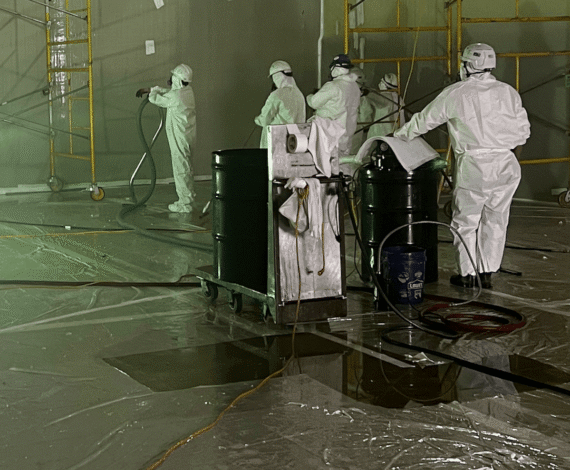
Asbestos-containing materials can complicate a renovation, delay demolition, or create concerns about damaged areas of a building. EnviroWorx Services provides asbestos mitigation for commercial and industrial properties, helping owners and contractors address these materials before the next phase of work begins.
Our approach brings together assessment, abatement planning, controlled removal, and waste handling. Whether you are updating an occupied facility or preparing a property for redevelopment, we help establish a clear scope and coordinate the work around your project.
Every property presents different access restrictions, construction plans, and operational needs. An office renovation may involve flooring in a tenant space, while an industrial project may require addressing insulation near equipment scheduled for replacement. The mitigation plan needs to account for both the affected materials and the work happening around them.
EnviroWorx works with property owners, facility managers, general contractors, and redevelopment teams. We review the proposed work, discuss site conditions, and help determine how asbestos abatement fits into the overall schedule. Planning these details early gives your team a clearer understanding of responsibilities, work-area restrictions, and the steps needed before other contractors can proceed.
Asbestos mitigation describes efforts to reduce the potential for exposure to asbestos-containing materials. Asbestos abatement refers to measures used to control the hazard, which can include removal, encapsulation, or enclosure. Removal physically takes the affected material out of the building; other approaches may leave it in place under specific controls.
The appropriate response depends on the material’s condition, location, and likelihood of disturbance. Material that can remain undisturbed may be suitable for management in place. Material within a planned demolition or renovation area may require a different approach. The EPA provides asbestos management guidance for building owners and managers.
An evaluation should guide that decision. Suspected materials cannot generally be identified reliably by appearance alone, and sampling should be performed by a qualified asbestos professional.
Floor removal, wall alterations, equipment upgrades, and demolition can disturb concealed or previously undisturbed materials. Addressing asbestos during project planning helps establish the abatement scope before construction crews begin work.
For covered facilities, federal asbestos NESHAP requirements require an inspection of the affected area before renovation or demolition. Applicable notification and work-practice requirements depend on the operation and materials involved, and state or local rules may add requirements. Early review helps account for these obligations in the project schedule.
Deteriorating insulation, damaged surfacing materials, and debris warrant professional evaluation when asbestos may be present. Water damage, fire, impact, and maintenance activities can change the condition of building materials.
If suspected materials are damaged, avoid disturbing them and arrange for an assessment. The next step should be based on the findings and the affected area’s use.
Building conversions, tenant improvements, and mechanical system replacements can bring workers into areas that have not been accessed for years. Reviewing existing asbestos information before finalizing the construction scope helps identify potential conflicts.
For owners and redevelopment teams, this planning also supports better coordination between environmental work, selective demolition, and subsequent construction.
Asbestos was used in a variety of building and industrial products. Depending on the property, an assessment may evaluate:
The presence of one of these products does not establish that it contains asbestos. Existing reports, professional inspection, and appropriate laboratory analysis help define which materials need to be addressed.
The process starts with understanding your property and proposed work. Existing asbestos surveys, laboratory reports, construction plans, and photographs can help define the initial scope.
We discuss the affected areas, access needs, and anticipated schedule with your team. Where information is incomplete, additional asbestos inspection or sampling may be needed before the abatement plan and estimate can be finalized.
The plan establishes which materials will be addressed, where the work will take place, and how it will connect with the rest of the project. It should also identify responsibilities for required notifications, monitoring, and final evaluation.
Clearly defining these items helps avoid confusion between the owner, environmental professionals, abatement contractor, and construction team.
Asbestos work requires controls appropriate to the material and activity. These may include regulated areas, restricted access, containment, engineering controls, and worker protection measures. OSHA’s asbestos resources explain workplace exposure controls and employer responsibilities.
Before work begins, coordination should address adjacent spaces, building systems, and movement through the property. The goal is to control exposure during the work while keeping everyone informed about access restrictions.
EnviroWorx performs asbestos abatement and removal within the agreed scope. Waste handling is planned as part of the work, including appropriate packaging, transport, and disposal arrangements.
If additional suspect materials are uncovered, the affected work should be evaluated before proceeding. Communicating changes promptly helps the project team understand their effect on scope and scheduling.
Project closeout includes the final evaluation and records appropriate to the work. Visual inspection and clearance testing requirements vary with the project, building type, and applicable rules.
The scope should establish who performs these services, including independent professionals where required or specified. Relevant reports and disposal records help document the completed work and support the decision to release the area for its next use.
An active facility needs a plan that accounts for people, equipment, and daily access. Before scheduling work, discuss occupied spaces, operating hours, delivery routes, and any planned shutdowns with the project team.
Depending on site conditions, the work may be divided into phases or coordinated with other construction activities. Some areas may need to be closed temporarily. Establishing these restrictions early helps facility managers communicate with staff and plan around the work.
The schedule should also allow for required notifications, abatement, inspections, and any applicable clearance procedures. A realistic plan considers the full sequence through release of the work area.
Get a clear plan for addressing asbestos before your next renovation, demolition, or facility upgrade. EnviroWorx Services can review your project information, discuss the affected areas, and help establish the next steps.
To get started, provide the property location, building use, anticipated start date, and any existing asbestos surveys or laboratory reports. Photos and construction plans can also help explain the proposed work.
Call (513) 871-2500 or contact EnviroWorx Services to request an asbestos mitigation estimate.