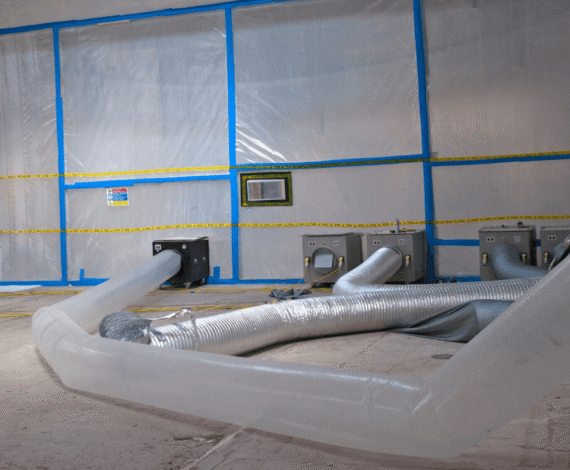
PFAS contamination can complicate facility operations, property transactions, and redevelopment plans. When testing identifies PFAS in soil or groundwater, the next step is to define the affected area and establish a practical approach to managing it.
EnviroWorx Services helps commercial and industrial property owners address environmental cleanup needs through organized fieldwork, contaminated material management, and coordination with the project’s environmental professionals. For PFAS projects, the scope starts with the available site data, cleanup objectives, and the work required to implement the selected remedy.
Whether you are evaluating an industrial property, addressing a known release, or preparing a site for construction, contact EnviroWorx to discuss your project and the remediation support it requires.
Per- and polyfluoroalkyl substances, commonly called PFAS, are a large group of manufactured chemicals used in certain industrial processes, products, and firefighting foams. Their resistance to breakdown can make contamination difficult to address using conventional cleanup methods.
Potential sources include historical releases of PFAS-containing aqueous film-forming foam, industrial discharges, and the handling or disposal of PFAS-containing materials. Contamination may affect soil, groundwater, surface water, or multiple parts of a property.
A property’s past use can identify reasons to investigate, but it does not establish the presence or extent of contamination. Environmental sampling and laboratory analysis help the project team determine which PFAS are present, where they occur, and what additional investigation or remediation may be needed.
For additional background, review the EPA’s PFAS resources.
Effective fieldwork begins with a clear understanding of the site. Existing environmental reports, sampling results, site plans, and proposed land use help define the work and identify information gaps.
EnviroWorx can discuss the field implementation requirements with property owners, environmental consultants, and engineers. Planning should address access, utilities, excavation limits, material handling, water management, and coordination with facility operations. Where additional investigation or specialist treatment design is needed, that work should inform the scope before remediation begins.
Removing impacted soil may be appropriate for a defined source area or an excavation required for redevelopment. The work must account for how soil will be separated, staged, loaded, transported, and received at its destination.
Depending on the selected plan, field activities may include:
Excavation removes soil from its original location; it does not destroy the PFAS it contains. Containment or stabilization may also be evaluated where suitable for the site and cleanup objectives.
PFAS-impacted groundwater may require extraction, treatment, migration control, or a combination of measures. Water generated during excavation may also need characterization and management before discharge or off-site shipment.
Potential water-treatment technologies include granular activated carbon, ion exchange resins, and membrane systems such as reverse osmosis. Their suitability depends on the PFAS present, water chemistry, flow rate, and treatment goals. Learn more about PFAS water-treatment technologies from the EPA.
EnviroWorx can discuss site preparation, installation support, and field coordination needs with the project’s treatment specialists. The scope should also address spent media, concentrated treatment residuals, and the ongoing work needed to maintain system performance.
A cleanup plan should consider whether a source area could continue contributing PFAS to surrounding soil or water. Addressing that source may be necessary alongside treatment elsewhere on the property.
Source-control work may involve removal of impacted materials, isolation of designated areas, or measures to manage water movement. During field activities, controlled work zones, runoff management, and equipment-cleaning procedures help limit the spread of contamination.
Material-management arrangements should be established before excavation or treatment generates waste. Soil, spent carbon, used resin, and concentrated liquids can require different handling and receiving-facility arrangements.
Project planning should identify waste-characterization needs, facility acceptance conditions, transportation requirements, and documentation. The selected approach must account for the material’s characteristics and available management options. Disposal and destruction are different outcomes, and the destination alone should not be treated as proof that PFAS has been destroyed. The EPA’s PFAS destruction and disposal guidance discusses available approaches and their uncertainties.
A treatment system may require continuing attention after installation. Inspections, sampling, operating records, and timely media replacement help the project team evaluate whether it is performing as intended.
Monitoring responsibilities and maintenance arrangements should be defined in the project scope. Where ongoing treatment is necessary, the owner should understand the expected operating requirements and the conditions that would trigger an adjustment.
PFAS investigation and remediation may be relevant to properties with a history of PFAS use, handling, or releases, including:
The appropriate response depends on the individual property. Historical use helps guide investigation; sampling results and site conditions guide remediation decisions.
PFAS remediation requires coordination between the property owner, environmental professionals, field crews, and material-management providers. Clear responsibilities help keep the project organized from planning through follow-up.
EnviroWorx provides environmental remediation, abatement, industrial cleanup, and related field services for commercial and industrial properties. Our approach emphasizes understanding the scope, planning the work, maintaining communication, and documenting completed activities.
For your PFAS project, we can review the requested field services and discuss how they fit into the broader cleanup plan. This allows the project team to identify specialist treatment needs, coordinate site activities, and establish realistic expectations before mobilization.